Lazio Pasta
Pasta Cacio e Pepe
Make pasta cacio e pepe with Pecorino Romano, black pepper, and starchy pasta water for a creamy Roman sauce.
- Prep
- 5 min
- Cook
- 12 min
- Total
- 17 min
- Serves
- 4
- Level
- Moderate
Instructions
- Grate the Pecorino Romano as finely as possible; coarse shreds are more likely to clump.
- Cook the pasta in less water than usual so the cooking water becomes concentrated and starchy.
- Toast the cracked pepper in a dry pan for 30 seconds, then add a ladle of pasta water to bloom its aroma.
- Transfer the pasta to the pan when it is just shy of al dente and toss with the pepper water.
- Let the pasta cool off direct heat for a few seconds before adding the cheese.
- Sprinkle in Pecorino gradually while tossing constantly, adding small splashes of pasta water to emulsify.
- Serve as soon as the sauce turns glossy and coats the pasta; do not return it to high heat.
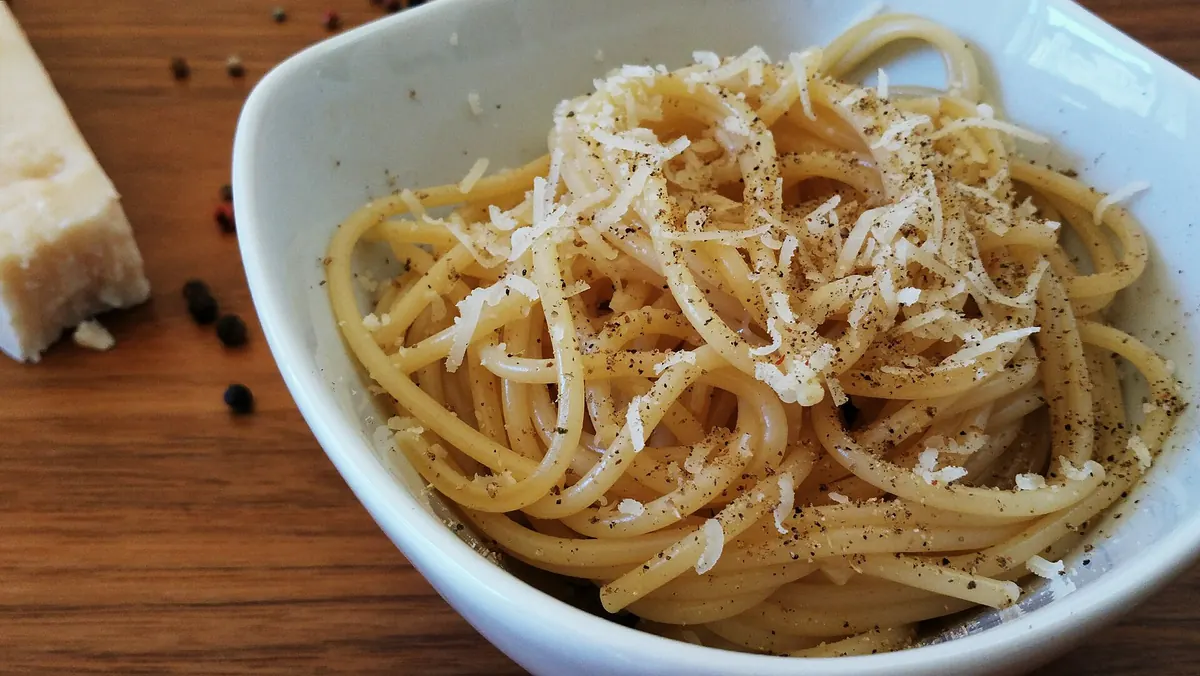
This pasta cacio e pepe recipe targets the creamy Roman cacio e pepe people want from only cheese, pepper, pasta, and water. The method prevents clumps and turns pecorino pepper pasta into a glossy sauce.
Why This Pasta Cacio e Pepe Recipe Works
Cacio e pepe rewards patience. Add cheese gradually and keep the pasta moving so it emulsifies instead of clumping.
Key Tips
- Cook the pasta in less water than usual so the water becomes very starchy.
- Add Pecorino Romano off the heat; direct heat is the main reason cacio e pepe pasta clumps.
- Use finely grated cheese and toss constantly until the Roman cacio e pepe sauce turns creamy.
Variations and Serving Ideas
The same technique helps when you want cacio e pepe pasta, Roman cacio e pepe, and pecorino pepper pasta. Keep the character of Pasta Cacio e Pepe in mind: choose good ingredients, control texture, and serve the dish at the moment it tastes most vivid.
Lazio Pasta romanquickvegetarianpecorino